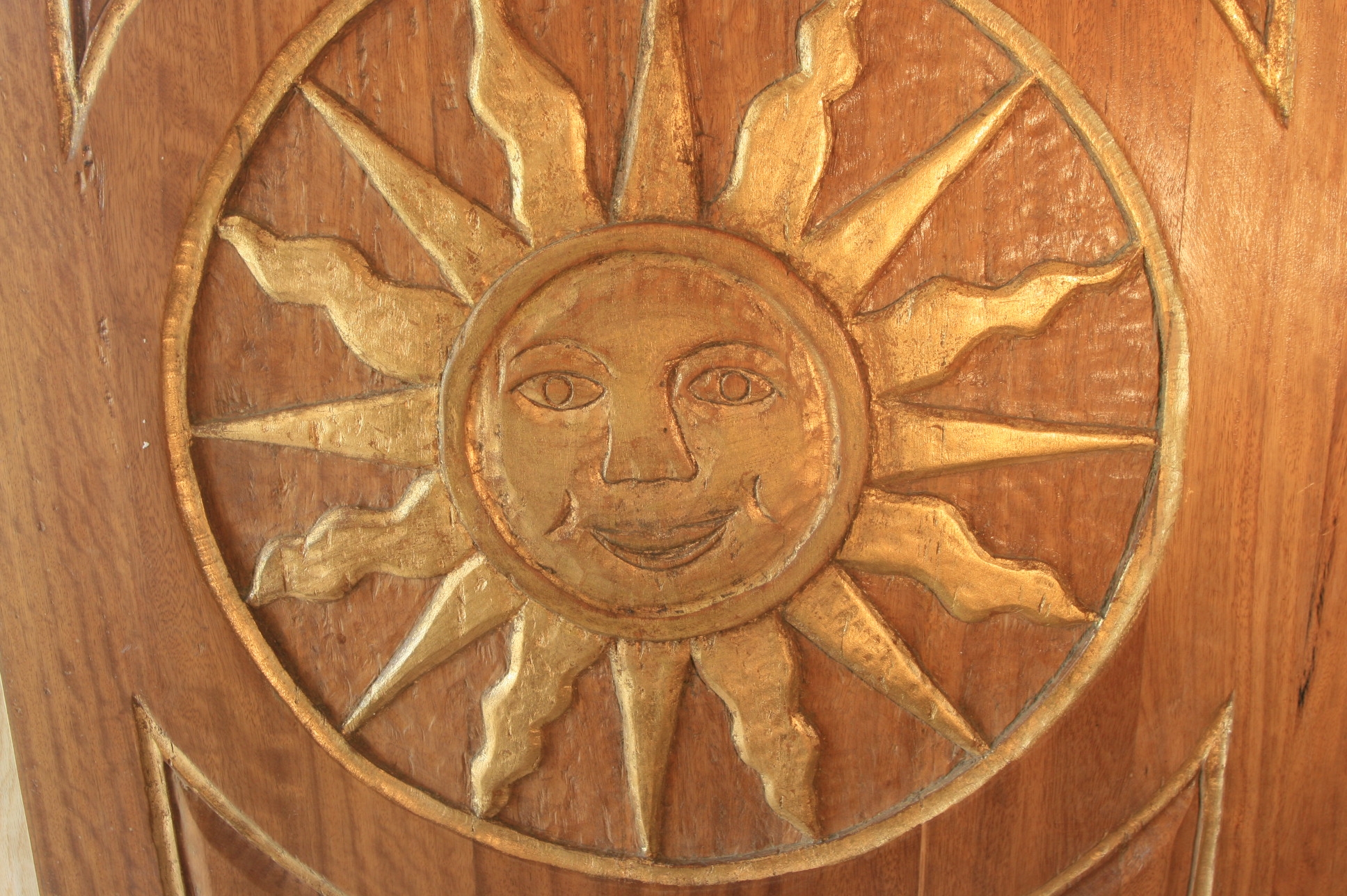
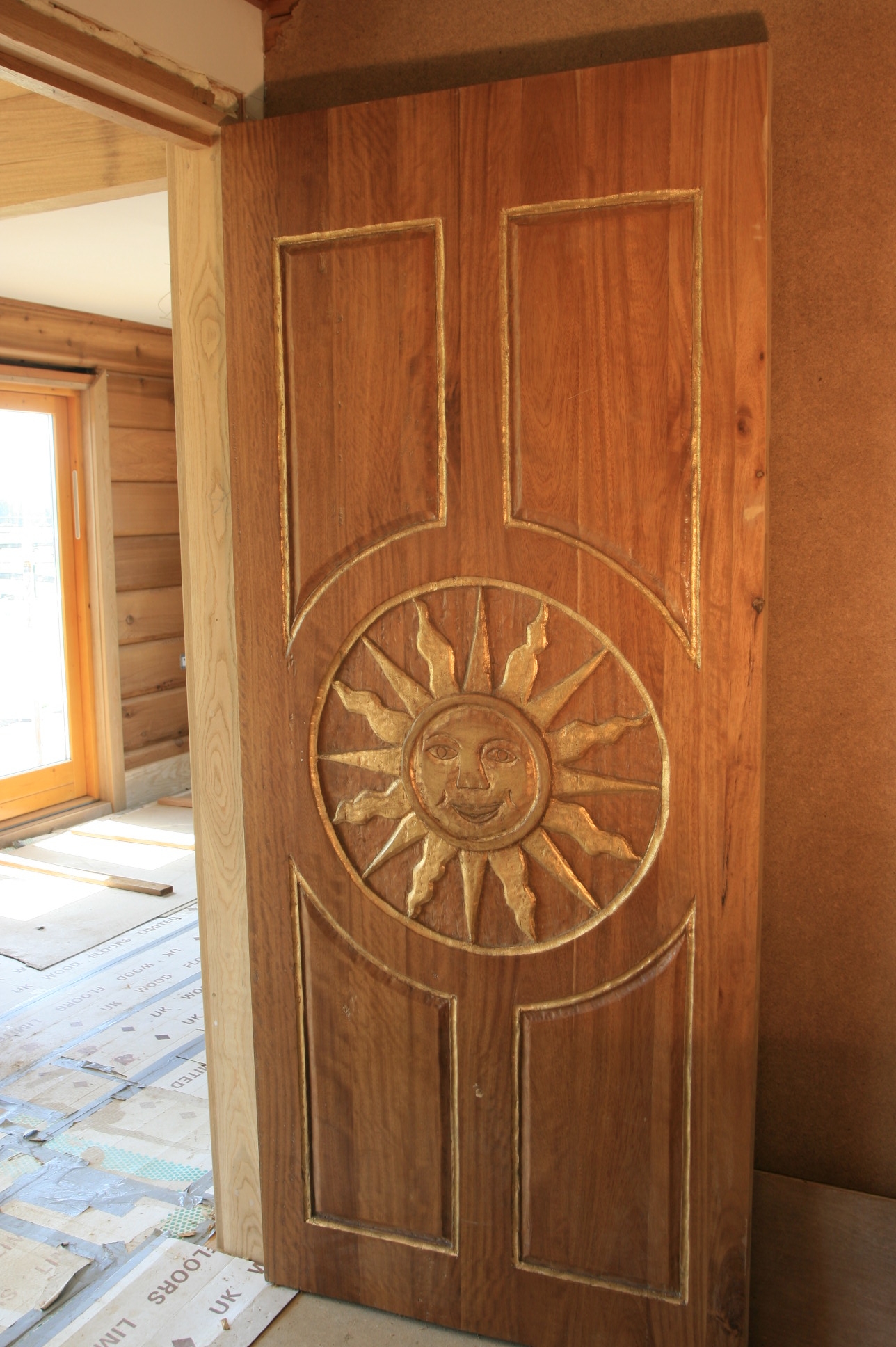
 A long, long time ago, we did the rounds of the self build home exhibitions and at one of these, we saw a beautiful carved gold leaf door, with a classic sun motif. It looked stunning but the “antique” style would not suit our largely contemporary theme in the house.
Later, as we drifted towards non standard window sizes (despite the advice of our architect to go for standard sizes to avoid exhorbitant costs – he was right!) during the specification of the log house kit, the doors were left for us to source independently from the main kit. We looked at various European doors, costing upwards of 3,000 Euros, but felt that this was taking up too much of the budget and the doors whilst stylish were a bit mechanical in their look, because they are produced on the door equivalent of an infinately variable production line, variable that is in size (in 3 millimetre steps) in colour, handles etc but not design.
After some scrabbling around on the internet we eventually found the agents for the original carved doors. By now this Irish couple had moved to America and were working with craftsmen in Spain and Italy.
Instead of having one carved door, caution was thrown to the wind and we (OK, I!) decided that all three single external doors would be carved, one with a sun, one with a moon and one with a star. We would have some glaze quarter panels in the moon and star doors to improve light into the kitchen and utility room, which with UK building regs would need to be double glazed. The door locks would be espagnolet three point and just to make sure, we sent the locks to the door makers in Spain so that they could fit them.
 Well, 7 months late, after many iterations to the carvings trying to get the look right, the doors arrived. The carvings were the least of the problems. The rustic look of the carvings extended to the construction method of the doors, the fitting of the locks, the warped shape of the doors etc. The method of construction with softwood tongues between iroko “planks” with no rail and stile construction meant the doors would almost certainly continue to warp and bend if used in an external environment where one side is warm and dry and the other side is exposed to the elements.
The agents had been working with the Spanish Artisan for several years, had clearly had similar problems in the past and this was the last straw. They wound up their business and could have left us high and dry. But in a credit to their business ethics they gave us a substantial refund on the doors and we have managed to use them in the house as rather expensive internal doors.
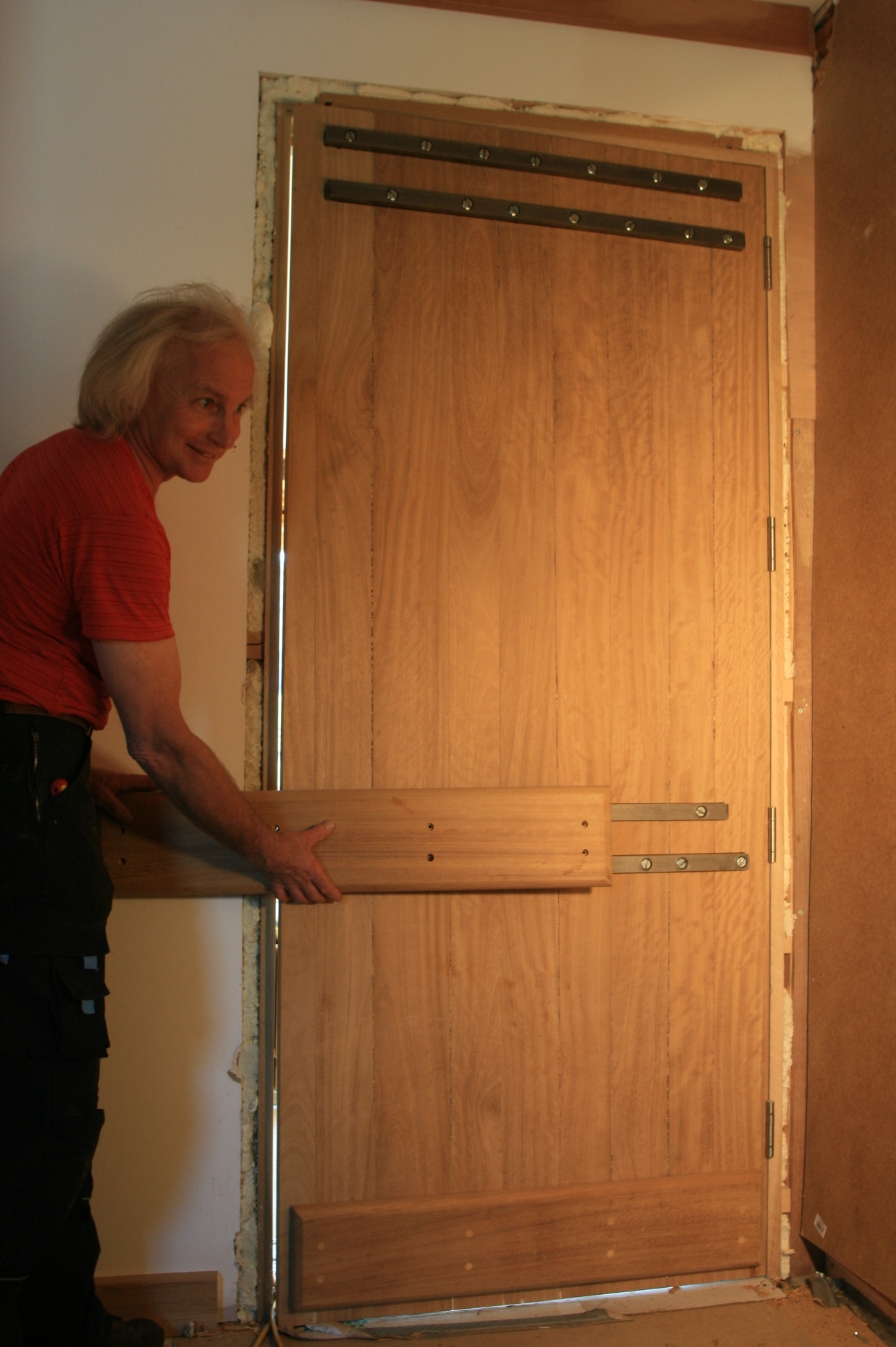
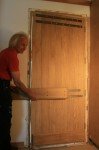 To reduce the risk of distortion our builder routered out chanels in the backs of the doors, fitted steel strips and covered them with “rails” which had a similar radius to the logs on the house so that the door looked appropriate to the internal face of the adjacent logs. Time will tell if this bends much.
Of course in a blog this makes one entry, in the real world this whole sorry saga from the doors arrival (seven months late) took a further eight weeks.
We replaced the external function of these doors with some “production line” doors from the nice people who made our aluminium clad windows and doors on the rest of the house, but more of these and what happened to the star and moon doors later.
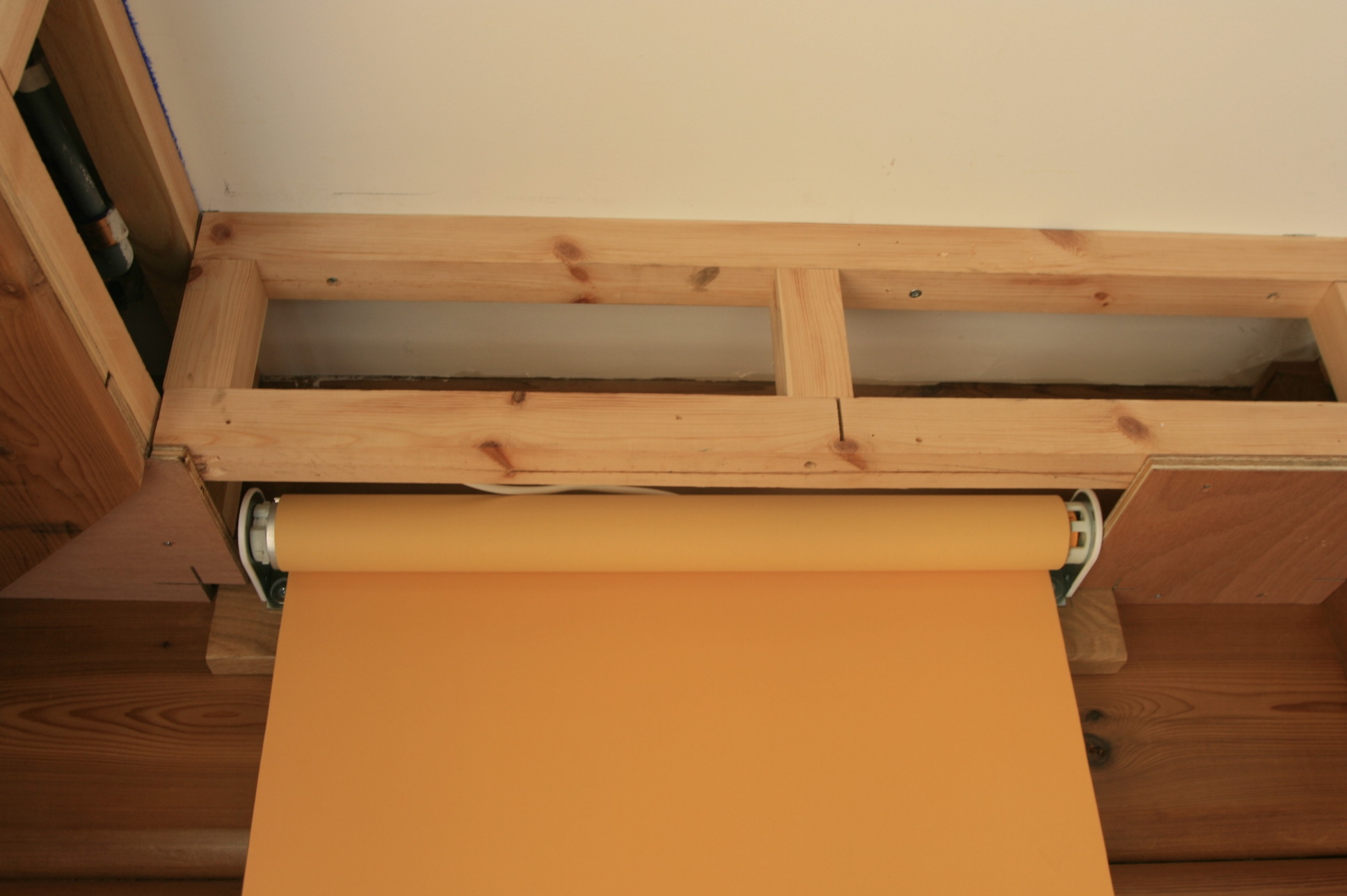 We have two big sliding glass doors and decided to go for motorised blinds to cover them and two other windows, with a hand held remote for their operation. We scoured the internet for possible suppliers but found that a lot of suppliers were franchises or agents and we wanted to work direct with a company that could supply them for us to fit, as there would be lots of boxing in with Western Red Cedar to conceal them.
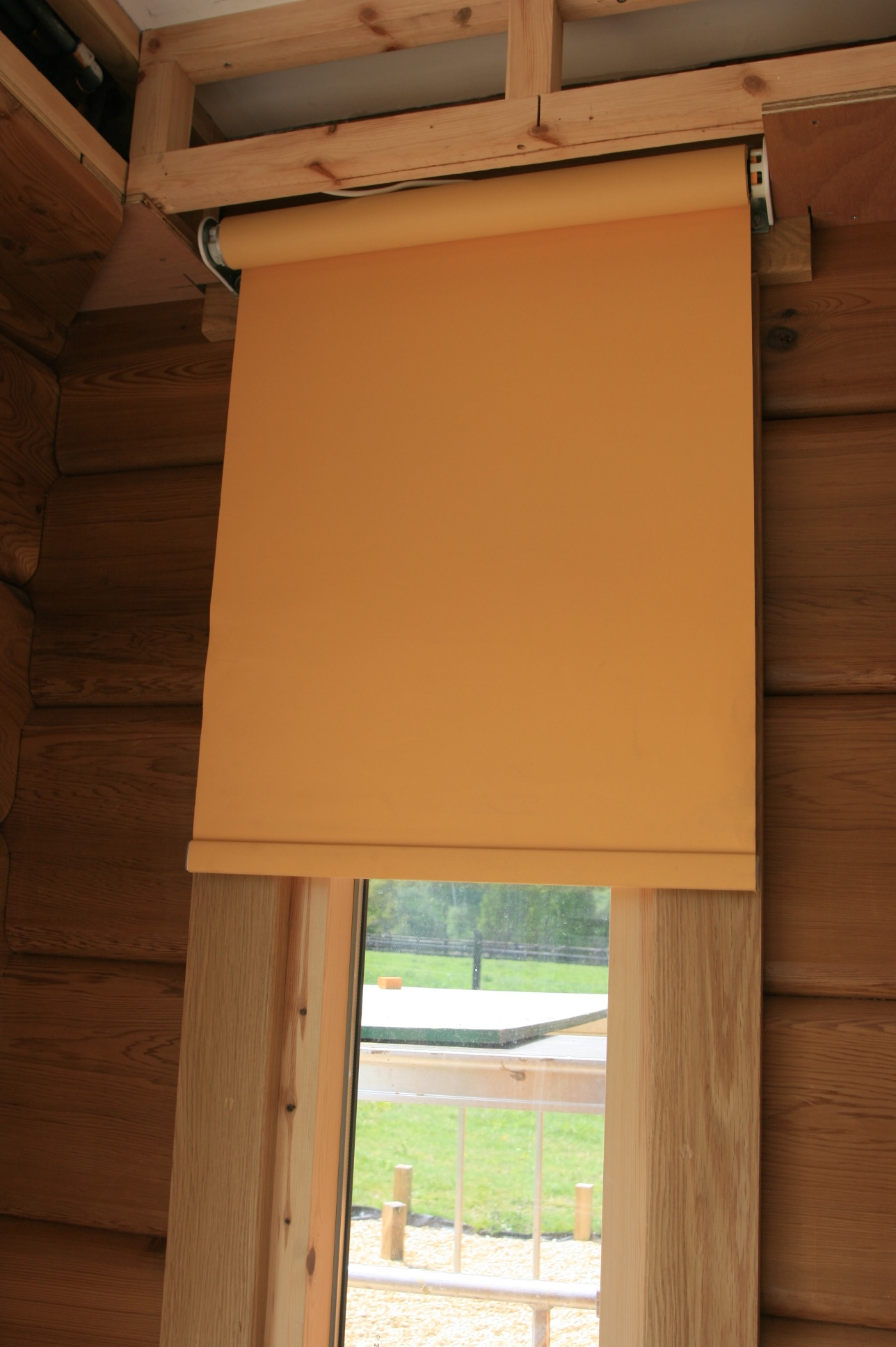 We found a company on the web called Trade Blinds Direct, who said they installed blinds and could supply us with what we needed and provide any technical help we needed. Well with the usual instruction sheet in 10 different languages for the motor but with mounting brackets totally different to the motor manufacturers drawing, we ended up needing technical help. At this point we got put on to the manufacturers UK agents direct (Somfy) who could not have been more helpful, but over 30 e-mails with Trade Blinds Direct failed to resolve who would provide a replacement motor due to an installation problem with the non standard brackets which wrecked one of the motors.
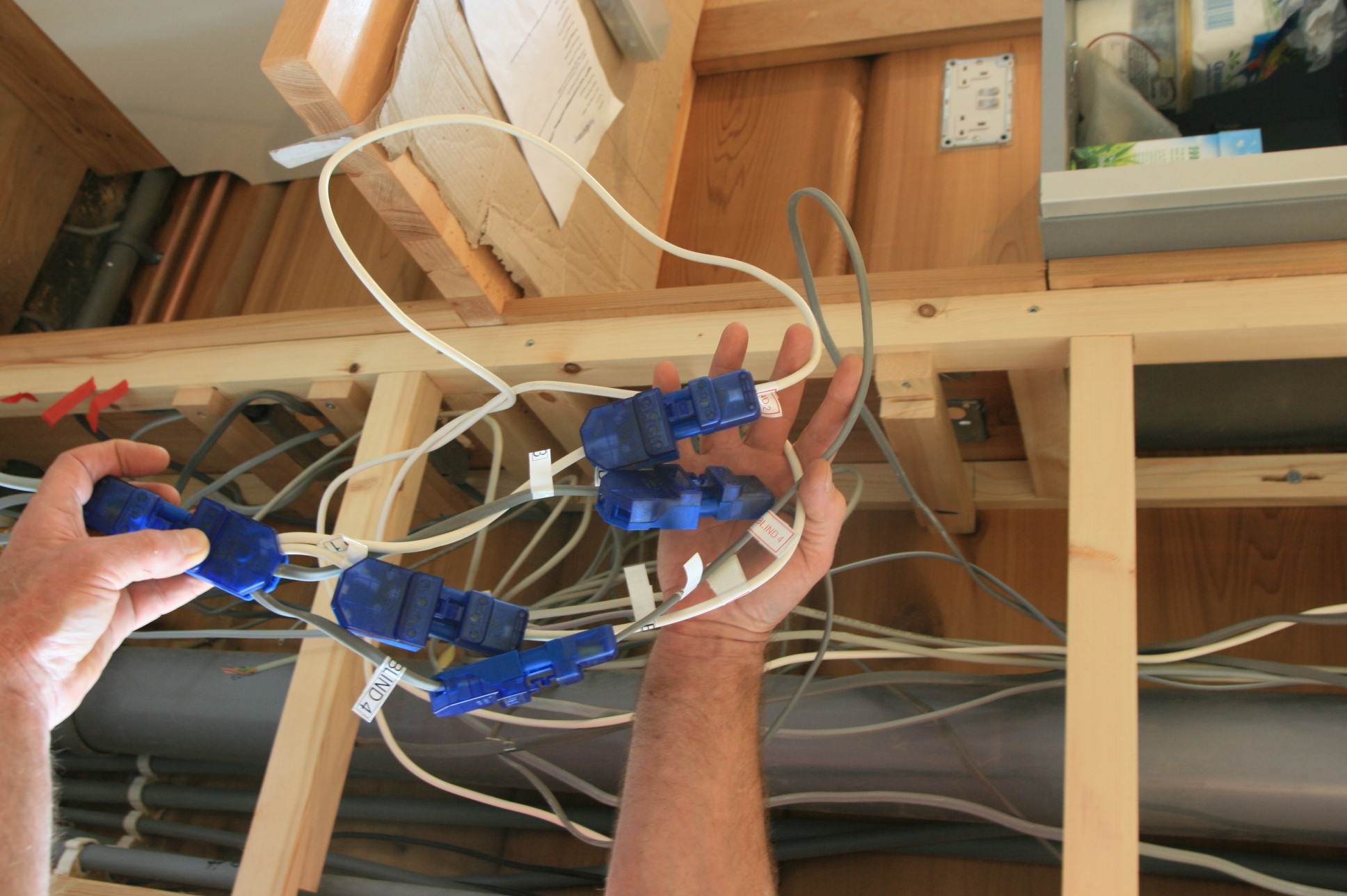 Life’s too short and for just over £100 the helpful people at Somfy UK supplied a replacement motor, but I have to say Trade Blinds Direct are one of the few suppliers we have used that I would not recommend.